
Legacy Award Honourees
2019 – 2026
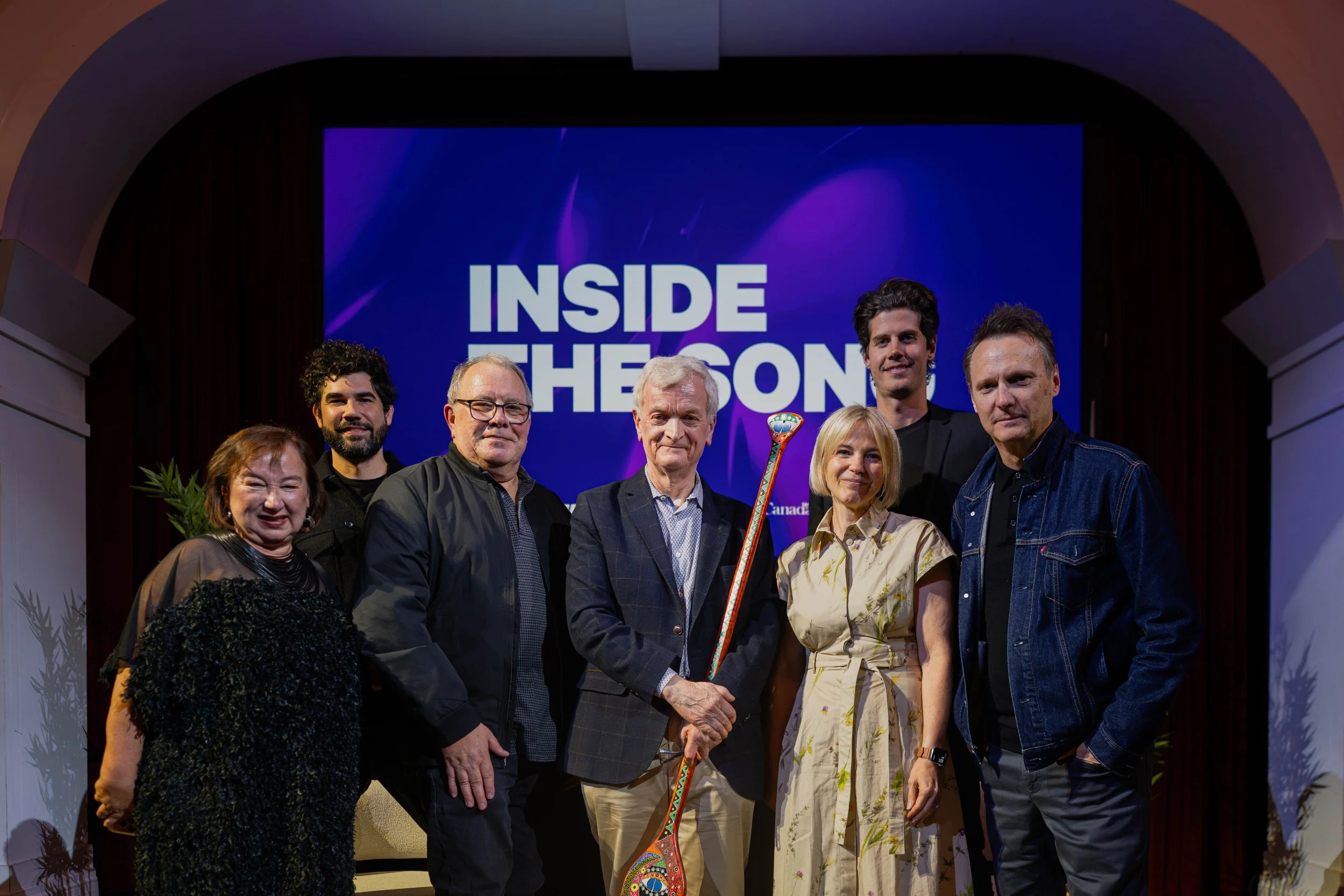
Photo Credits: CARAS/RyOnes
Frank Davies
Lifetime Achievement Award
Britain has had a foundational influence on Canada — and this one Brit in particular a profound influence on the music industry.
Let me be frank: producer and music publisher Frank Davies isn’t just an industry veteran; he’s an architect of the Canadian music business, with many key firsts and a remarkable ear for developing, producing, publishing and furthering the careers of so many artists and songwriters: Crowbar, King Biscuit Boy, A Foot in Coldwater, Fludd, Tom Cochrane, Klaatu, Chilliwack, The Rankin Family, Serena Ryder, Jane Siberry, Eddie Schwartz, Hagood Hardy, Murray McLauchlan, Alfie Zappacosta, Honeymoon Suite, Ron Hynes, David Tyson, Molly Johnson, Marc Jordan, Dan Hill and many, many others.
Frank arrived in Canada in time to attend the very first Juno Awards, in 1970, originally called the Gold Leaf Awards. How many of us can say that? Decades later, he made it his mission to recognize the very people behind the songs that give us all our jobs — the songwriter — by creating the Canadian Songwriters Hall of Fame in 1998. In 2014, his significant contributions to the Canadian music industry were recognized by the Juno Awards when he was selected to receive the Walt Grealis Special Achievement Award.
So how did this Northampton native end up in Toronto?
Frank — born Francis William Harding Davies, a rock star of a name if we’ve ever heard one — actually started subscribing to Billboard Magazine at age 13, while he was in the naval academy. By 18, he dreamed of becoming a record producer, but for now he’d have to be content writing about other people’s creations. When he got into Strasbourg University in France in 1964, he applied to be the French correspondent for Billboard and got the gig. He was paid 12 LPs per article. That started it all.
When he returned home in 1966, he landed a job at EMI in London as a management trainee. What better label to be at during such an exciting time in pop music — the home of the Beatles! His first week was spent at Abbey Road Studios, arranging interviews for British Invasion acts and the A&R triumvirate of George Martin, Ron Richards and John Burgess, ultimately becoming Assistant Manager of International Promotions. He next worked in the London office of a California label, Liberty Records, handling international sales and promotions from 1967 to 1968.
With such global interest in British pop and rock at the time, Frank regularly liaised with the foreign press while at EMI and Liberty. One such scribe was Australia’s Ritchie Yorke, who had recently moved to Canada. In 1969, Ritchie arranged for Frank to meet American rockabilly artist Ronnie Hawkins, who wanted to create a Canadian label. That meeting laid the groundwork for Love Productions Ltd. and Daffodil Records. Frank came to Canada in early 1970 to work out the details and launched the venture with Hawkins and Yorke. As he was launching Daffodil, Frank also became a founding member of the Canadian Independent Record Production Association (CIRPA), now the Canadian Independent Music Association (CIMA).
Daffodil’s first signings were Crowbar and King Biscuit Boy, followed later by A Foot in Coldwater, Fludd, Klaatu and Tom Cochrane, with Frank also managing several of the label’s artists. The company also broke new ground as the first Canadian independent label to be distributed by a major international record company, through Capitol/EMI. Its first three Canadian albums gained prominence on U.S. charts in the label’s first year, and its acts went on to enjoy repeated chart success in both Canada and the U.S.
Frank holds the distinction of being the person who produced, published and released the first official CanCon recording, Crowbar’s “Oh What A Feeling,” in 1971. The song went on to become an enduring touchstone of Canadian music, later lending its name to the JUNO Awards’ 25th-anniversary box set, earning SOCAN Classic status and being inducted into the Canadian Songwriters Hall of Fame in 2011.
After Frank bought out Hawkins and his lawyer, he became the majority owner, with Bill Ballard, Myron Wolfe, Peter Steinmetz and Michael Cohl coming in as shareholders in the mid-1970s. With new investment in place, Daffodil continued under Frank’s leadership, eventually moving its Canadian distribution to GRT. During that period, Frank worked alongside GRT president Ross Reynolds, overseeing GRT’s music publishing interests and handling its artist roster internationally, including Dan Hill, Ian Thomas, Prism and Moe Koffman.
In 1978, he launched Partisan Music, a production and publishing company that entered into an exclusive deal with Capitol Records to develop talent worldwide — the first such record-production agreement between a Canadian company and a U.S.-based multinational record company. He brought them Alfie Zappacosta, the Leggat brothers and Graham Shaw.
In early 1982, he received an offer he couldn’t refuse: president of publishing company ATV Music Canada, where he signed and developed Canadian talent including Eddie Schwartz, David Tyson, Aldo Nova, Pukka Orchestra, Headpins, Chilliwack, Toronto and Dan Hill. ATV also became the worldwide administrator of the Partisan and Daffodil publishing catalogues.
Four years later, after Michael Jackson acquired ATV, Frank formed his own company, TMP: The Music Publisher, which, over the next 14 years, became Canada’s largest independent music publisher, with a catalogue of over 5,000 Canadian songs by artists and songwriters including Murray McLauchlan, Jane Siberry, Honeymoon Suite, Ian Thomas, Hagood Hardy, Eddie Schwartz, John Capek, Dean McTaggart, Sherry Kean, Exchange, John Cody, Julian Taylor/Staggered Crossing, Ron Hynes — and the list goes on. Frank also expanded the company’s presence into Nashville, signing American songwriters and artists including Byron Hill, Rick Braun and Odie Blackmon, among others.
TMP also secured more than 1,500 cover recordings of songs in its publishing catalogue by such heavyweights as Joe Cocker, Cher, Alice Cooper, Bette Midler, The Carpenters, The Doobie Brothers, Bonnie Raitt, Heart, k.d. lang, Tom Cochrane, Alannah Myles, Loverboy, Emmylou Harris, Wynonna, The Guess Who, Amanda Marshall, George Jones, Don Henley and Sheryl Crow.
Frank sold TMP to Alliance Communications Corporation and A&F Music in 1994, staying on as its President/CEO until the end of 1999.
In 1998, Frank founded the non-profit Canadian Songwriters Hall of Fame/Le Panthéon des auteurs et compositeurs canadiens (CSHF/PACC) to celebrate and honour both Anglophone and Francophone Canadian songwriters. The idea was sparked after he learned that Ruth Lowe, who wrote Frank Sinatra’s first No. 1 hit, “I’ll Never Smile Again,” was Canadian — a discovery that reinforced for him how little recognition many of the country’s great songwriters had received. Frank and his company provided the Hall’s initial funding, then secured matching support from members of the Canadian Music Publishers Association, with CMRRA subsequently doubling the funds raised. He served as chairman until 2004 and remains on the induction committee to this day. The Hall has since inducted such national treasures as Neil Young, Gordon Lightfoot, Leonard Cohen, Oscar Peterson, Joni Mitchell, David Foster, Paul Anka, Luc Plamondon, Robbie Robertson, Blue Rodeo, Sarah McLachlan, Alanis Morissette, Bryan Adams and Rush.
Since founding Let Me Be Frank Inc. (LMBF) in 1999, Frank has executive produced albums by Serena Ryder, the Rankin Family, Heather Rankin, the Pukka Orchestra, The Treasures, Nate J and Graeme Williamson, and continues to publish and administer a large catalogue of works written by David Tyson, Nathan Ferraro, Ian Janes, Danielle Bourjeaurd, John Cody, Andrew Matheson and Graeme Williamson, while also mentoring many emerging artists and songwriters. Songs from the LMBF catalogue have been recorded by artists including Beyoncé (“Texas Hold ‘Em”), Alessia Cara, Charli XCX, Bonnie Raitt, Sofia Camara, bülow, Blu DeTiger, Preston Pablo, Johnny Orlando, Virginia to Vegas, Alannah Myles, Donna Summer, The Pointer Sisters and Anne Murray, among others.
Frank has consulted extensively for ole Media Management (now Anthem Entertainment), advising the company on major music publishing and catalogue acquisitions and helping to finalize a number of those deals. His consulting work has also included Microsoft/Xbox, the Department of Canadian Heritage, the Ontario Media Development Corporation and the Neighbouring Rights Collective of Canada. LMBF has also maintained an active sync business over the years, securing placements for songs from its catalogue across film, television, advertising and other media.
Davies has served on many industry boards and executive committees, including CARAS, where he was the first music publisher appointee and served as Vice-President/Trustee; FACTOR; SOCAN; the SOCAN Foundation, which he chaired; the CMRRA board for 17 years, including as Chair from 1992 to 1996; and the executive committee of the Canadian Music Publishers Association for 18 years. During his years with CMRRA and on the executive committee of the CMPA, Frank was closely engaged with issues affecting the compensation and rights of Canadian songwriters and publishers, including efforts to improve mechanical royalty rates and his strong opposition to controlled-composition clauses that reduced publisher and songwriter earnings.
In addition to receiving the Walt Grealis Special Achievement Award from the Junos, he has received two more special achievement awards, from SOCAN in 2004 and the Canadian Songwriters Hall of Fame in 2005. He was also twice named Music Publisher of the Year by The Record, received CIMA’s Founders Award in 2015 and the SOCAN Guardian Award in 2021.
Indeed, after 62 years, Frank is still tirelessly working on behalf of our industry and songwriters. Let us be frank: we have England to thank for a lot. Afternoon tea, Shakespeare, the World Wide Web, the jet engine, soccer – and Frank Davies.
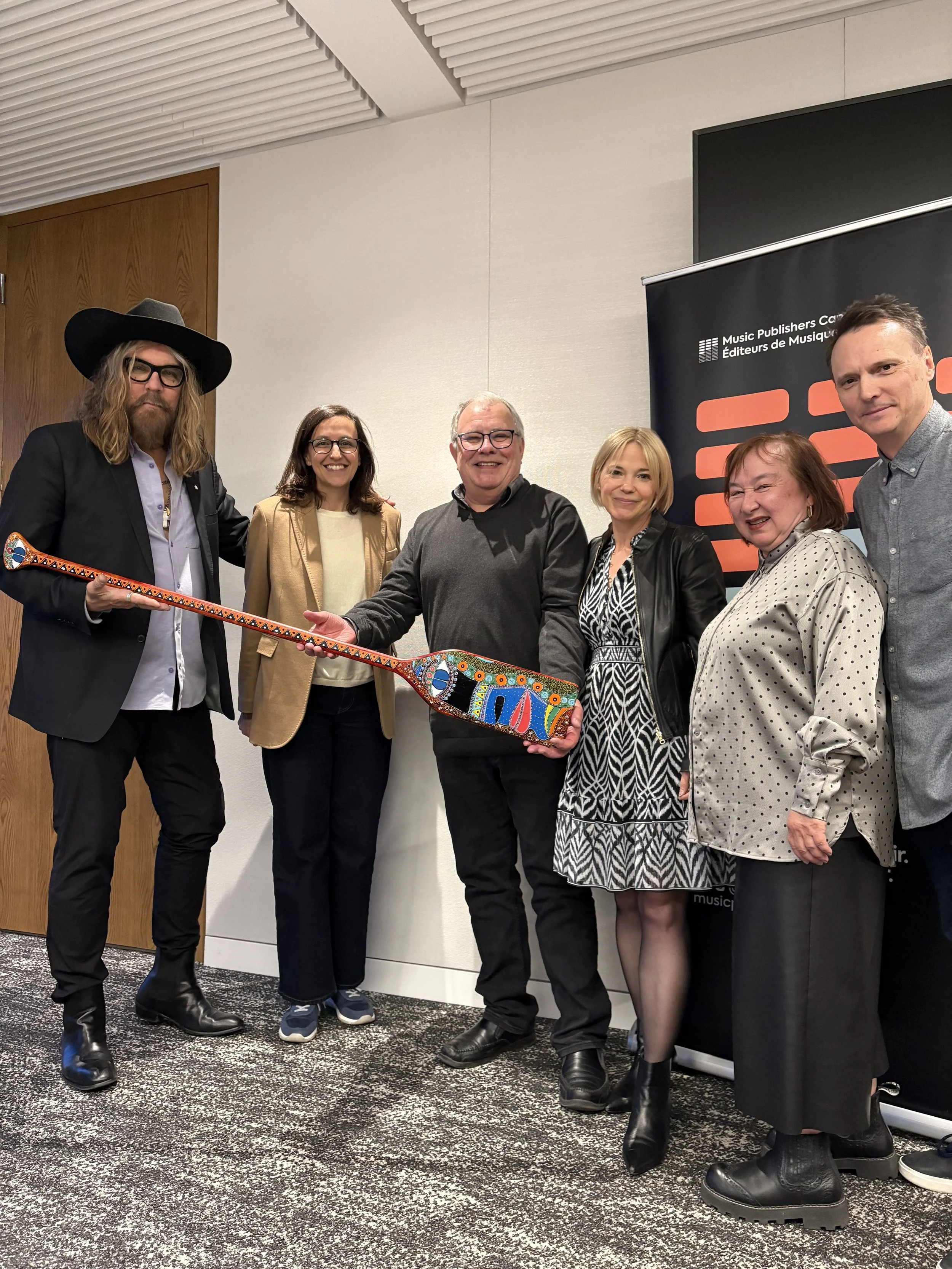
Gary Furniss - Sony Music Publishing Canada
Lifetime Achievement Award
After 33 years, on March 31, 2026, Gary Furniss has “retired” from running Sony Music Publishing Canada. Note the air quotes. He’s back behind the board of his home studio Stonehouse, working with his old pal Tom Wilson, as he always has, the singer of Junkhouse which he produced before he got into music publishing.
Gary got his start in the studio and never left when he went to the corporate side in 1993.
His accomplishments while president of SMP were crucial to the advancement of the Canadian songwriting sector, representing a roster of talented Canadian songwriters spanning all genres and generations. Some were performers and recording artists in their own right while others built careers behind the scenes: LIGHTS, K’naan, Tawgs Salter, Mother Mother, Intense, 254 Bodi, Liz Rodrigues, Pitt Tha Kid, Forest Blakk, Dax, Fefe Dobson, Anjulie, Estate of Oscar Peterson, Joel Stouffer, Peach Pit, and, of, course Tom Wilson.
His early signings include Tom’s band Junkhouse, Hemingway Corner, The Philosopher Kings, Chantal Kreviazuk, Amanda Marshall, Stephan Moccio, Dave Thomson, Tara MacLean, USS, Edwin, Prozzak, Our Lady Peace, and Rob Wells.
Many of these artists and songwriters have received Juno Awards, SOCAN Awards, some even Grammys, and gold and platinum awards.
Gary is particularly proud of signing Moccio after receiving a cassette from Sony A&R exec Mike Roth. Moccio’s dream was to work with Céline Dion and he did just that, landing “A New Day Has Come” — a song he wrote with Aldo Nova — not only on her 2002 album, but it was the first single and title track. Her Vegas show was even called A New Day Has Come.
So how did Gary end up in the corporate world?
He attended Fanshawe’s Creative Electronics course in his native London, Ontario, which soon was renamed Music Industry Arts. He was quite the go-getter, reaching out to numerous heavyweights in the industry. One of them was Jack Richardson (The Guess Who, Bob Seger, Alice Cooper). The famed producer invited him for a chat in Toronto at Nimbus 9 studio the very next day and Gary made the quick decision to blow off his exam. It ended up the right decision. It kicked off his career.
Gary was later able to use the studio on downtime to record and produce demos and albums with such as acts as Demics, Figgy Duff, The Shakers, and Fictions. He later recorded and co-produced the band True Myth, with Tom Treumuth and Jack Richardson, for Warner Canada.
Gary was shopping a band he produced in New York to all the labels but one of the band members told him that a guy back in Toronto was interested — that guy was Mike Roth. Gary went to see him when he was back in Toronto, which was the start of a decades-long friendship that continues to this day.
Gary mentioned this other act he had heard on cassette, Junkhouse. Turns out Roth had the same tape and suggested they work on the project together. They ended up co-producing the first album, Strays, alongside the band, and brought in Malcolm Burn
For the next two or three years, Gary engineered and mixed for Sony Music.
Along the way, Richard Rowe, CEO of Sony Music Publishing in New York, wanted to meet him and offered him the job as Creative Director at the publishing arm in Canada.
Gary didn’t view it as a corporate gig. He saw it as an opportunity to sign and develop new writers and find them new opportunities. He spent his entire career there, promoted to Vice-President, then, finally, President.
He was so passionate about advocating for the rights of creators that during his time at Sony, he sat on the boards of SOCAN, SOCAN Foundation, MPC, CSHF, CARAS and CMRRA, where he served as chairman/director.
As a previous CARAS director, he also contributed to the development of the JUNO Songwriters’ Circle – one of the highlights of JUNO Week, with proceeds from ticket sales going to MusiCounts, supporting music education.
In his first year of this so-called “retirement,” Gary is busy producing, recording/mixing and writing at his private studio and is excited about the projects with Tom Wilson, Tom’s son Thompson Wilson, and the band Junkhouse.
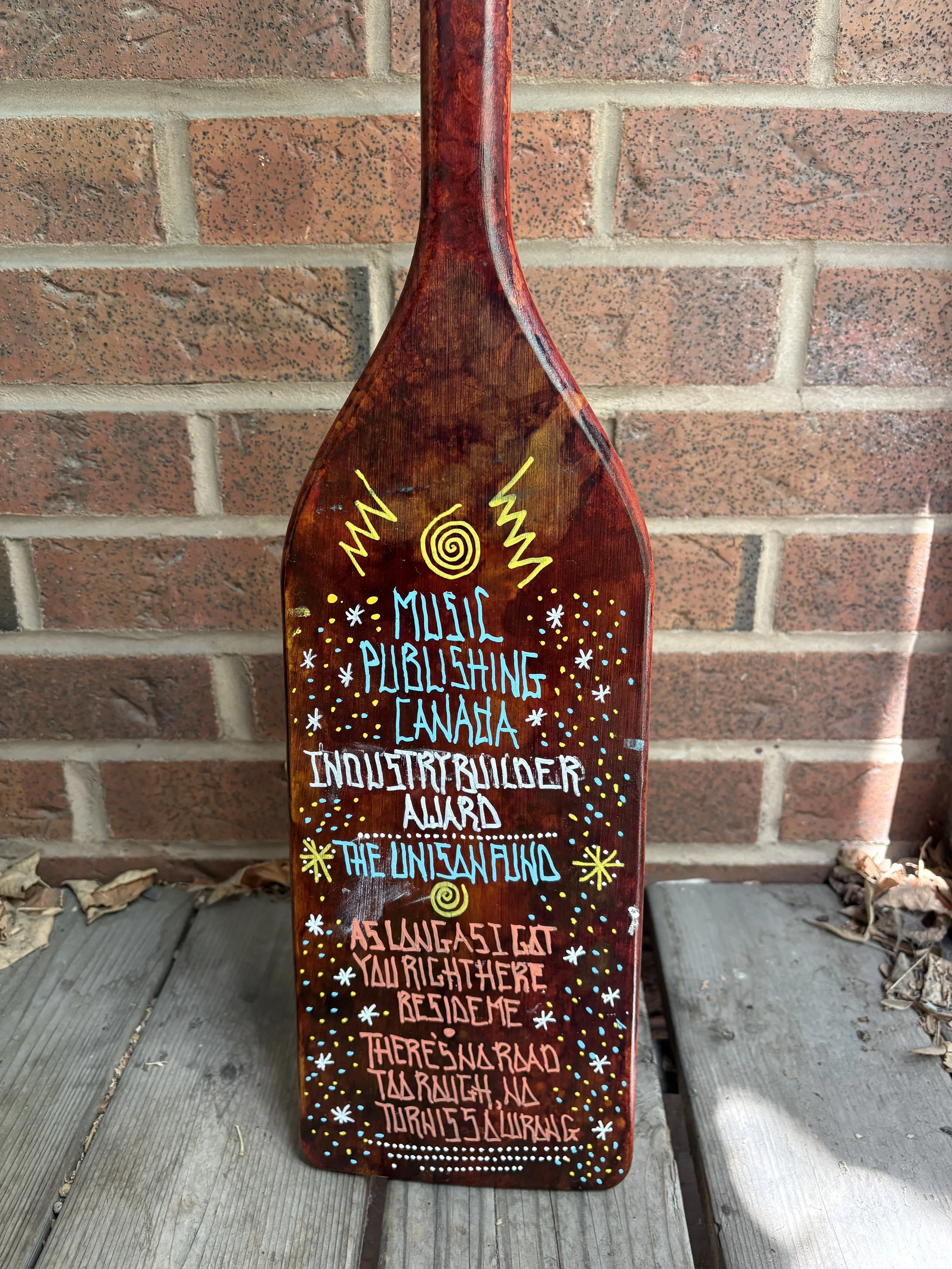
The Unison Fund
Industry Builder Award
Who wouldn’t want to spend their life working in the music business, surrounded by creative people onstage and off, listening to music, attending concerts, strategizing on how to advance the next generation of artists and industry professionals? It’s the best job in the world.
But what we quickly discover is it’s very rarely glitz and glamour, red carpets and limousines, and “swimming in the money,” as Drake would say.
That’s why, in 2010, the Canadian music industry came together to establish the Unison Fund, the country’s only national organization providing financial, health, and human support to the people who make Canada sound like Canada. To date, Unison has financially supported over 13,000 music professionals.
Why is it needed?
Many people who work within the music industry are self-employed and do not have benefits or assistance outside government-funded universal healthcare, which, yes, covers a lot — we are lucky as Canadians — and yet it does not cover such things as dental, physiotherapy, psychotherapy, addiction treatment, even the costs of many medications or prescription glasses.
Also, for the self-employed, there’s no paid sick leave, pension plans or unemployment insurance. One illness, one accident, a death of a loved one, a mental health issue, or simply a lack of work opportunities, can put people in crisis.
Perhaps, you can pay rent but have nothing left over for gas or public transit; have enough money for groceries but not for the phone bill; can cover your basic living expenses but can’t afford that root canal. Or, maybe you need legal advice for a business or marriage breakup or help with tackling addictions.
Unison is 100% confidential and assesses each applicant’s request on a case-by-case basis. All approved support is paid directly to a third-party (landlord, therapist, medical supplier, etc.) and counselling services are offered through TELUS Health.
The idea for such a fund came to Toronto-based music publisher Jodie Ferneyhough after a beloved Canadian artist was hit by a car while riding a scooter, leaving him in a coma and requiring months of rehab. He later passed away of cancer. There were fundraisers, but something more long-term was needed.
Ferneyhough shared his vision with Catharine Saxberg, then-executive director of the Canadian Music Publishers Association (now Music Publishers Canada), who had also been affected by the loss of friends in the music community, and together the pair rallied the industry to realize their vision. Everyone was onboard, of course.
The non-profit would help not just creatives — singers, musicians and songwriters — but producers, recording engineers, guitar and drum techs, tour managers, artist managers, sound engineers, indie publishers, club bookers, indie labels, publicists,
freelance journalists — anyone working professionally in the music industry for at least five consecutive years.
In 2010, a Board of Directors was formed, and in 2011 the funding pool — originally called the Unison Benevolent Fund — received initial commitments of $250,000 from Music Canada — which represents the major labels — and Slaight Music, followed in 2012 by $100,000 commitment from a collective of music publishers. That same year, Unison launched the Counselling & Health Solutions Program, while continuing to fundraise. In 2015, after reaching the $1 million target, the Financial Assistance Program was ready to go.
As word spread about the much-needed emergency fund, more industry organizations and individuals continued to support it. The flagship fundraising event, Holiday Schmoozefest, held each December became the party of the year. Other events also occurred annually, like the signature Golf Classic.
As the years went on, and needs were identified, Unison expanded.
During the pandemic, a dire time for the entire music industry, especially the live sector, Unison saw a 3,000% increase in applications for its emergency financial assistance in 2020 alone, and disbursed more than $3.5 million, as part of the COVID-19 Relief Program. From 2020 to the end of 2021, more than 3,500 people availed themselves of the program. Over $30 million has been distributed since 2015.
Today, the Unison Fund has identified other needs in our community.
In 2022, The Slaight Family Foundation Legacy Program was created to help music industry veterans, as well as those coping with unexpected or chronic illness. In April 2024, it introduced The Grocery Gift Card Support Program; in January 2025, they launched the Natural Disaster Relief Program in response to the Los Angeles fires, for Canadians who have been affected by a natural disaster or have been forced to evacuate, and later that year, in November, added the Extended Therapy Support Program to bridge gaps in mental health care.
The counselling service, TELUS Health, also has 250 additional languages and dialects through LanguageLine Solutions, as well as Telephone Devices for the Deaf (TTY).
Unison Fund has thought of everything, and we couldn’t be more thankful to Ferneyhough and Saxberg for having the compassion and tenacity to get this off the ground.
2026
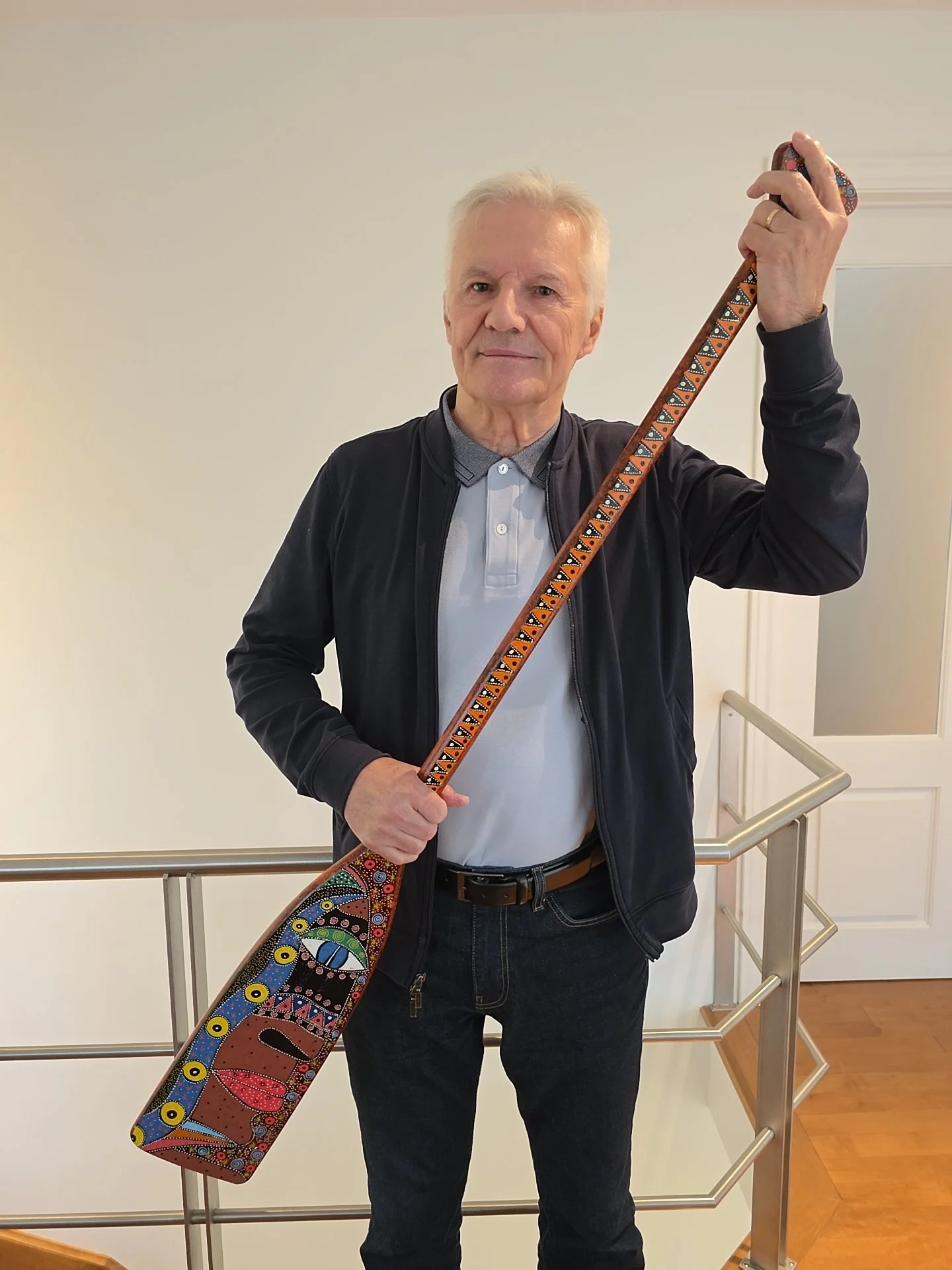
Daniel Lafrance - Éditorial Avenue
Lifetime Achievement Award
It is hard to imagine the Canadian music publishing industry without Daniel Lafrance. Having been a musician, composer, music teacher, record producer, manager, tour promoter, and tour director before making his foray into music publishing, there is truly no aspect of the industry that he hasn’t touched in the 50 years he’s been in it.
Daniel’s first step into the music industry came as a guitarist with the jazz combo Solstice, where, besides being a musician he was also booking shows and doing promo. Eventually, he started his own label and started producing other bands. Over time, Lafrance whittled down his packed resume and focused on managing various Quebecois acts. It was during this time in the 80s, that he got his first taste of the music publishing industry. He never looked back.
He soon began making the transition to full time publishing. When an early signing, Julie Masse, hit it big with “Les Idées Noires”, he knew he was on the right track. Bolstered by Noires’ success, Lafrance began reaching out to his contacts from his management life and his roster began to grow and grow.
Not long after, Lafrance began spending more and more time in Paris, where a series of smart business moves brought him to working with Walt Disney France and becoming a sub-publisher for companies like peermusic France and Canal Plus. It was during that time that he was also introducing the French music world to his Quebec signings.
When Daniel returned from France in the early days of 2000, heleveraged all his success into starting Éditorial Avenue, one of Quebec's leading independent publishing houses, of which he is the CEO to this day. With offices in both Montreal and Paris, Éditorial Avenue's authors include Daniel Bélanger, Loco Locass, the members of Bran Van 3000, Pierre Lapointe, Sophie Nault, Dave Richard, Lhasa de Sela, Marc Déry, Mara Tremblay, Roger Tabra, Jean-François Lemieux, Mattew Burton, Patrice Dubuc, Ariane Moffat, Fredric Gary Comeau, Yves Marchand, Ily Morgane, Paul Kunigis, Martine Coupal, Carl Bastien, Antoine Sicotte, and Anastasia Friedman, to name but a few. Internationally his company’s catalogue is represented through his sub-publishers in 42 countries. In addition to its own catalogues, Éditorial Avenue manages the catalogues of over 50 Quebec publishing houses.
Daniel is not just focused on his company and his writers. He is also deeply invested in the broader music publishing world and songwriting ecosystem. He is a founding member of APEM and served on its Board of Directors for 20 years. He also served as its president for the first eight years. In 2013, Lafrance’s career achievements were recognized by APEM/PMPA’s Christopher J. Reed Award.
Daniel is also an honorary member of ADISQ, which has recognized him nine times during his career as “Music Publisher of the Year”. Daniel is also a board member of Music Publishers Canada and SOCAN as well as the Canadian Songwriters Hall of Fame. He has also been a member of the board of directors of CMRRA.
Daniel’s love for the publishing industry is palpable. “I am not working,” Lafrance says. “I am just trying to reach some goals. It drives me and I don’t know where it comes from but I’m like that, I’m just like that. I’m on a mission.”
Congratulations on the 2025 Music Publishers Canada Publishing Company Legacy Award. Thank you to CMRRA for sponsoring this award.
- Jodie Ferneyhough, CCS Rights Management & MPC Board Member
2025
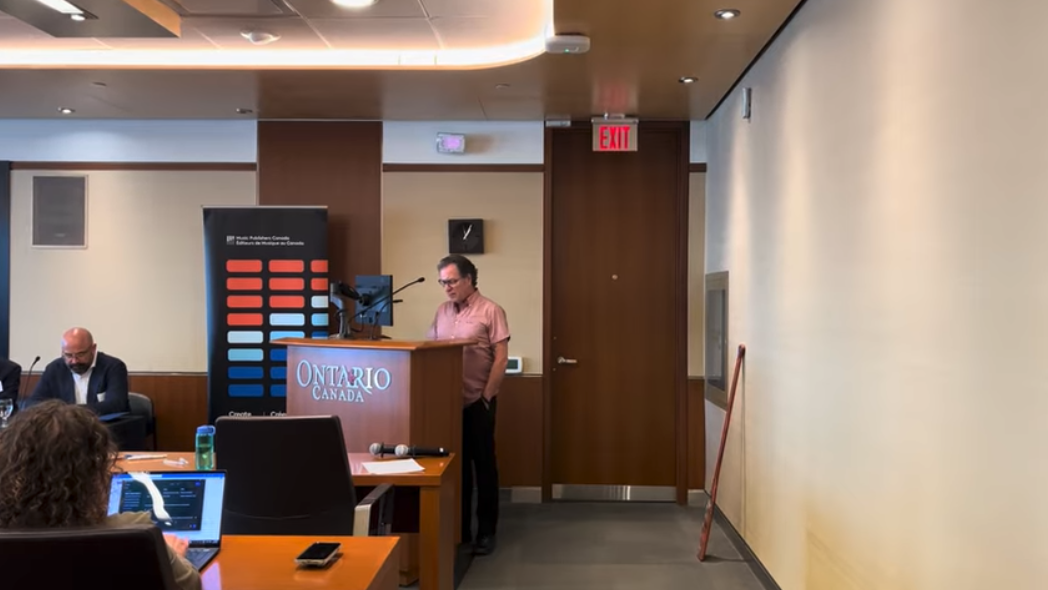
Daniel Lafrance Award Presentation
CMRRA
Industry Builder Award
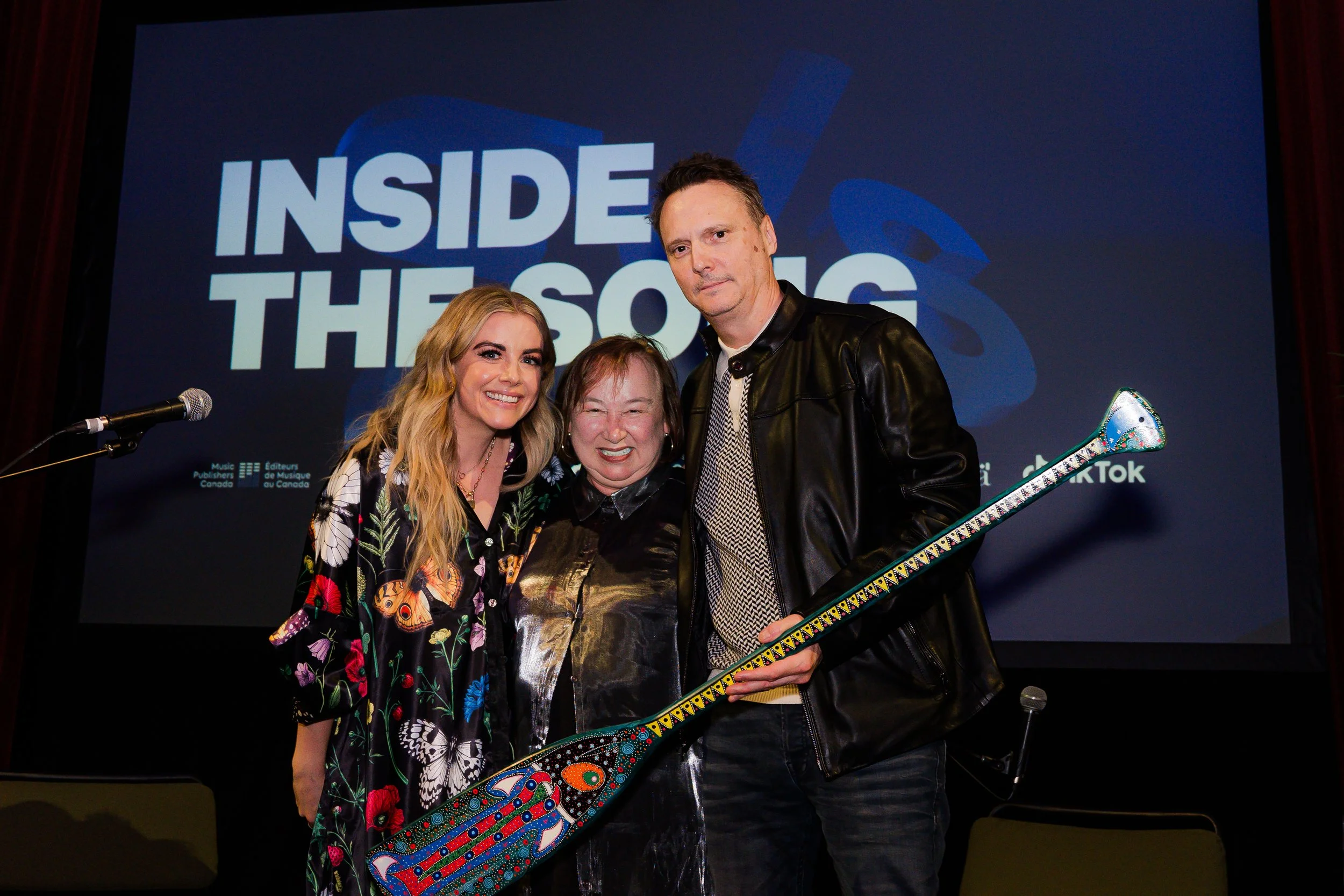
The Canadian Musical Reproduction Rights Agency (CMRRA) was established 50 years ago when Pierre Gauthier, President of the Canadian Music Publishers Association (CMPA, now Music Publishers Canada) and a group of its publisher members embarked on the creation of an organization to oversee the licensing of musical reproduction rights in Canada. Their goal was to promote the interests of music publishers and their songwriting partners through advocacy, communication, and education. And thus the CMRRA was born in 1975.
In its early years, CMRRA’s managed mechanical licenses for physical products, including vinyl records, cassettes, and CDs. Fast forward to a the rise of digital music platforms and the rise of digital music platforms like iTunes and peer-to-peer file sharing networks in the early 2000s. This led to an urgent need for new licensing frameworks. CMRRA responded by advocating for the right to license musical works directly to online music platforms and ultimately expanded its licensing activities to include digital music distribution. This shift was pivotal in ensuring clients could receive fair compensation for their works.
Today, CMRRA stands as Canada’s leading authority in both digital and physical mechanical licensing, although its true strength lies in its ability to reinvent itself to stay ahead of the evolving music industry. This ability to adapt and innovate has been central to the agency’s longevity within the Canadian music ecosystem.
SOCAN
Industry Builder Award
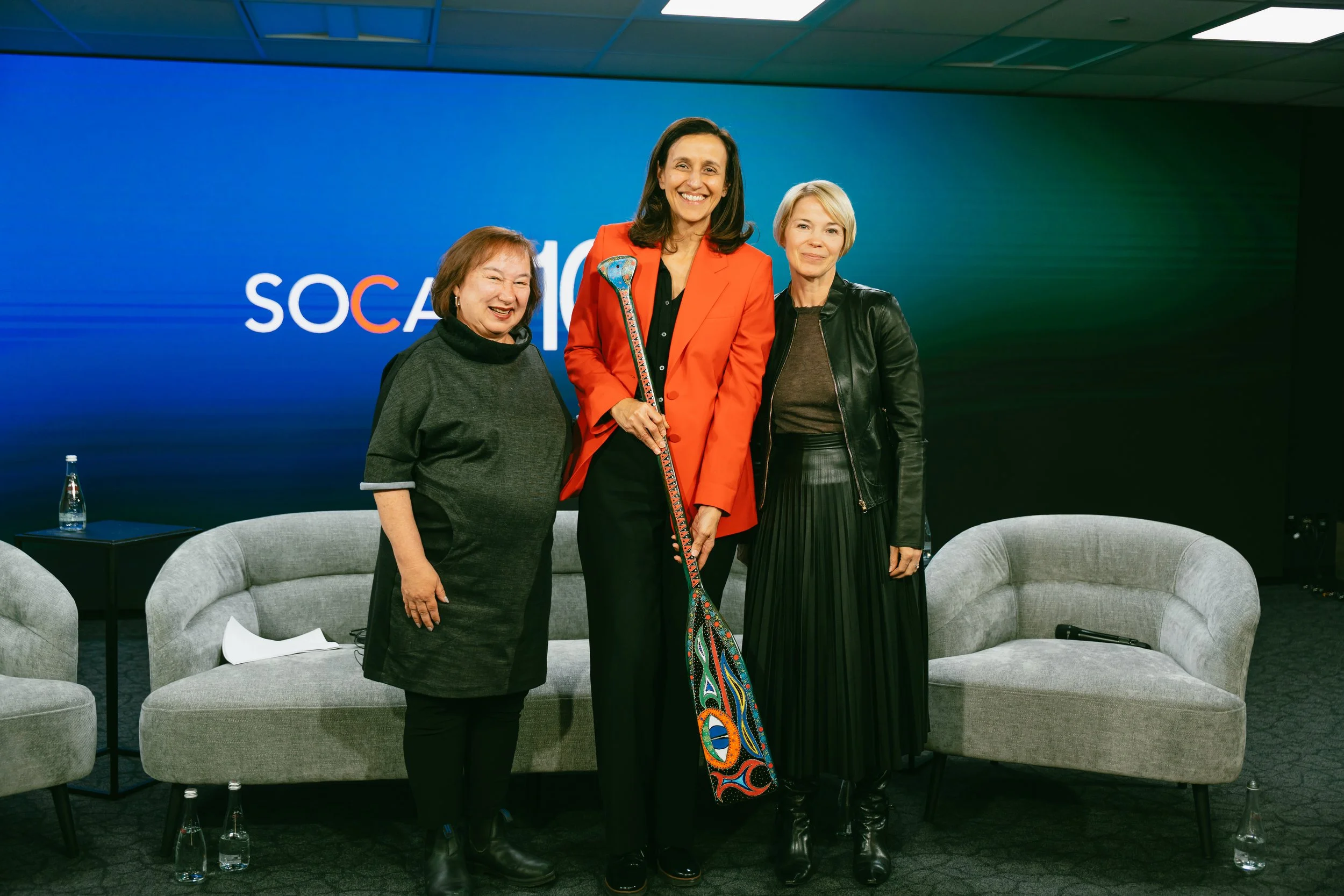
SOCAN (Society of Composers, Authors and Music Publishers of Canada/Société canadienne des auteurs, compositeurs et éditeurs de musique) was established 100 years ago and is a performing rights society (PRO) that administers performing rights on behalf of its members — Canadian composers, songwriters, lyricists, and their publishers — as well as members of its international sister societies throughout the world. SOCAN is Canada's largest member-owned music rights organization, championing the fundamental value of music and the people who create it.
In its current form, SOCAN was formed in 1990 by merging two former Canadian PROs: CAPAC (Composers, Authors and Publishers Association of Canada Limited), founded in 1925 as CPRS-Canadian Performing Rights Society; and PROCAN (Performing Rights Organization of Canada Limited), founded in 1940 as BMI Canada Limited.
In 1992, SOCAN formed the SOCAN Foundation which fosters musical creativity and promotes a better understanding of the role of a wide variety of music creators.
SOCAN is a national organization, operating all over Canada. SOCAN’s head office is located in Toronto with more than 300 on staff across the country. SOCAN also maintains regional offices in Montreal, Vancouver, Halifax, and Los Angeles. As of 2011, SOCAN’s membership consisted of approximately 94,000 writers (songwriters, composers, lyricists) and 12,000 music publishers. SOCAN’s operation is overseen by a board of directors made up of nine songwriter/composers and nine music publishers.
The SOCAN Foundation was formed in 1992 to foster musical creativity and promote a better understanding of the role of music creators in today’s society. The Foundation is an independent organization that is guided by its own board of directors, made up of composers, songwriters, music publishers, and other music industry representatives.